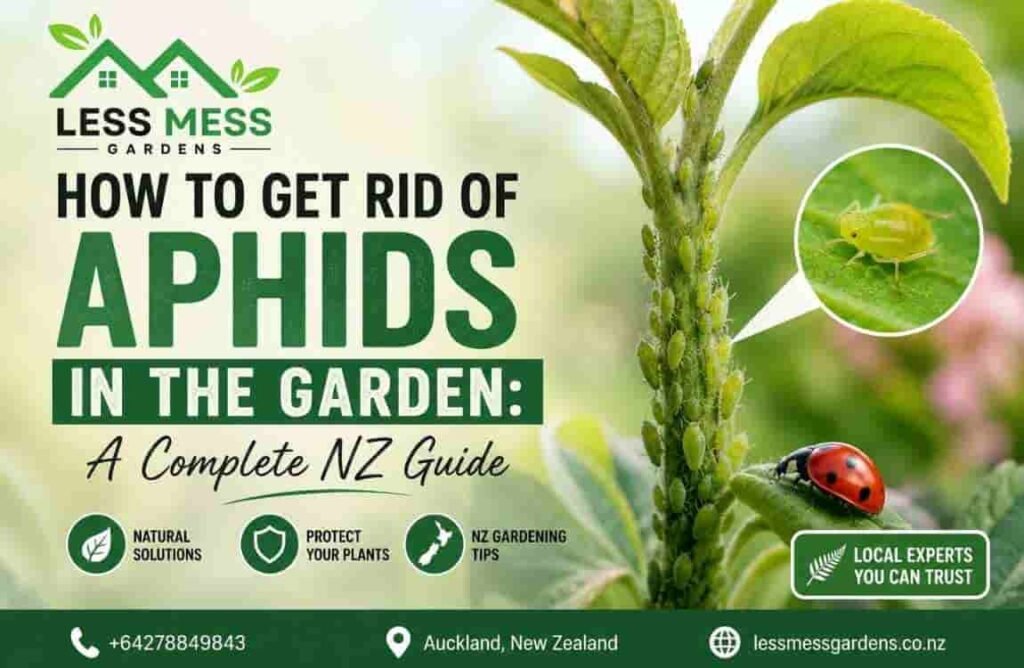
A well kept garden is basically a living web of life where every plant has a part to play, but those cheeky aphids can toss the balance right out of whack. They’re small, sure, and maybe they look kind of harmless… but they can weaken your plants, carry off diseases and slowly cut down the look, and also the output, of your space. So yeah knowing how to get rid of aphids NZ gardeners run into is kind of a must if you want everything thriving outdoors.
At Less Mess Gardens, we put in proper gardening support across Auckland, New Zealand. That means help for homeowners who want their gardens to stay healthy, fresh, tidy, and not overrun by pests. Give us a call today on +64 278849843 for practical garden maintenance and pest management advice.
What Are Aphids?
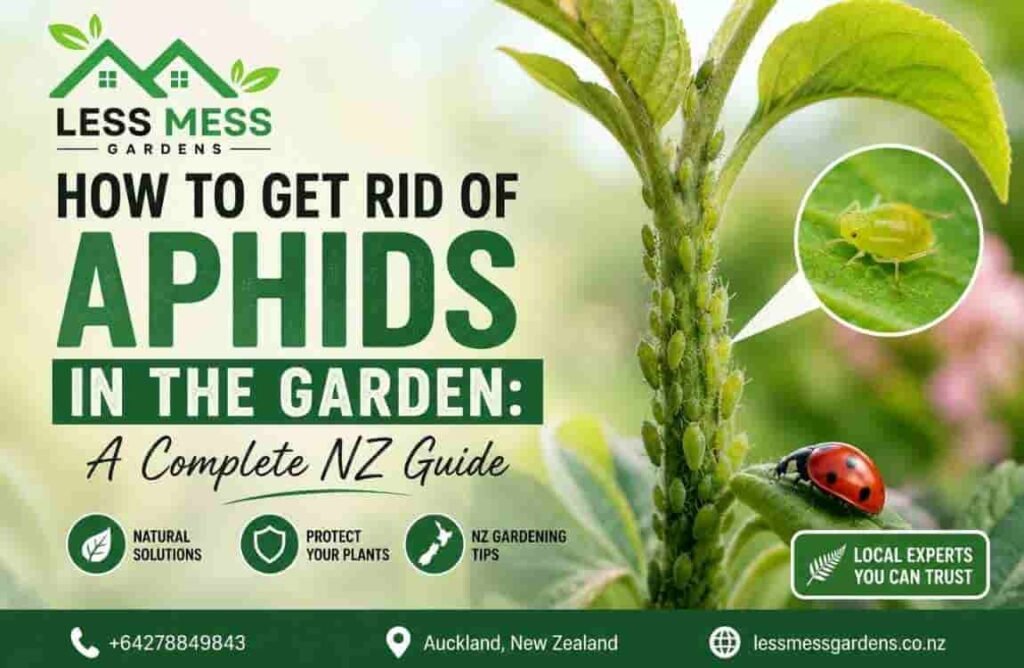
Aphids are these tiny, soft bodied insects that feed mostly on plant sap. They tend to gather on the underside of leaves, stems , buds, and even on young shoots. with their needle like mouthparts they pull out nutrients from plants and that creates stress, it also weakens the plant over time
They also reproduce really quickly, especially when the weather gets warm so their numbers can swell fast if nothing is done. You’ll often see aphids on vegetables, flowers , fruit trees, and ornamental plants in and around Auckland gardens, kinda wherever there’s fresh growth
Different Types of Aphids Found in Gardens
Honestly there are thousands of aphid species around the world, and in New Zealand gardens several of the types can show up and mess with plants , kind of like little soft-bodied troublemakers.
Green Peach Aphid
Green Peach Aphids are among the more common garden pests. They feed by sucking plant juices from vegetables, flowering plants, and fruit trees. They can also pass plant viruses, which means crop health can end up getting affected in a pretty noticeable way.
Black Bean Aphid
Black Bean Aphids are dark-coloured insects that are often spotted on beans , broad beans and other garden crops. If there are a lot of them they may cause leaves to curl, weaken stems, and overall reduce plant growth , you might see it slowly declining over time.
Rose Aphid
Rose Aphids usually target rose bushes and other flowering plants. They gather around new shoots and flower buds, which stops healthy blooms and can lead to distorted growth , like the plant just never looks right.
Woolly Apple Aphid
Woolly Apple Aphids turn up as white cotton-like clusters on apple trees. They can harm roots and branches, which then affects tree vitality , and fruit production drops too.
Cabbage Aphid
Cabbage Aphids mostly bother cabbage, broccoli, cauliflower, and other brassica plants. They cause curled leaves and can make the vegetables less suitable for harvesting , sometimes the leaves look rough before anything else.
Damages Caused by Aphids to Any Garden
Aphids can cause quite big problems when they are left untended ,and yes, if you ignore them for too long. A few common kinds of damages show up like this:
Stunted Growth
By feeding on plant sap, aphids pull out useful nutrients that the plant really needs for solid development. As a result, the growth gets slower, and the plant can turn kind of fragile.
Yellowing Leaves
When aphids are feeding, the leaves can lose their normal colour, and then they start looking off. The affected leaves may yellow , droop, or even drop from the plant later on.
Honeydew and Sooty Mould
While they feed, aphids leave behind a sticky liquid called honeydew. This attracts ants and also helps sooty mould come along. The mould kind of covers leaf surfaces, blocks sunlight and then it messes with photosynthesis ,in a real way.
Transmission of Plant Viruses
Some aphid types spread harmful plant viruses as they travel from one plant to another. Then you may see serious garden health problems ,pretty quickly too.
Deformed Flowers and Fruits
Heavy aphid activity can harm buds, blossoms, and fruits that are still developing. That often leads to a weaker harvest, or the growth ends up distorted ,and the quality drops.
How to Get Rid of Aphids
Honestly, the best approach kind of depends on how bad it is, like how many you’re seeing and where they’re hiding. Usually, when you mix prevention with natural solutions and some proper garden care, you can get steady long term results.
Natural Ways to Get Rid of Aphids
A lot of gardeners lean toward natural control methods because they shield helpful insects and keep the whole garden ecosystem healthier. In other words, you’re not only chasing the aphids, you’re also caring for the bees, ladybugs, and all that quiet balance going on.
Homemade Pesticides
Soap and Water Spray
Mix mild liquid soap with water, then spray it right onto the plant parts that are affected, like under leaves where aphids often hide. This can help lift them off the surfaces.
Neem Oil
Neem oil works like a natural insect control approach, it messes with how aphids feed and also how they reproduce. When it’s applied correctly it’s suitable for many garden plants.
Garlic Spray
Garlic has natural compounds that repel aphids, so a homemade garlic spray can help safeguard your plants without jumping straight to harsh chemicals.
Natural Aphid Predators
Getting beneficial insects around is one of the most earth-friendly ways to deal with aphids, instead of fighting them with chemicals.
Parasitic Wasps
Parasitic wasps naturally bring aphid numbers down, because they use aphids as hosts so their larvae can grow.
Lacewings
Lacewing larvae are tough little predators, they feed on aphids and help keep a more natural garden balance.
Ladybugs
Ladybugs are classic aphid hunters. If you introduce them, or attract them, aphid numbers can drop a lot naturally.
Physical Removal Methods
Pruning
Take off heavily affected leaves, stems or branches, doing this can help stop aphids from spreading further through the garden.
Hose Them Off
Use a strong stream from a garden hose to knock aphids off the plants. Do it again and again until the infestation starts to shrink.
Chemical Ways to Get Rid of Aphids
If aphids get really serious, you may end up needing a chemical approach, kinda like going straight for the source. Insecticidal soap, horticultural oil , and other approved garden insecticides can do a decent job of bringing the population down, sort of depending on the situation.
When using any kind of chemical product, keep these points in mind:
- Always read and follow the label instructions, exactly.
- Try not to spray during flowering times, especially when bees are active.
- Pick a product that actually matches your plants, not just “something similar”.
- Use chemicals only as a last resort when you can.
If you’re unsure, a professional gardener can point you toward the right option, while still helping to protect your plants and the nearby surroundings too.
Preventing Future Aphid Problems
I mean, the easiest way to keep a garden healthy is prevention… just do it early. Try these small habits, they kinda help a lot:
- Check your plants regularly for early clues, aphids are sneaky so look closely.
- Make sure plants are watered properly and also get the right nutrition.
- Take out weeds that pull in pests or give them places to hang around.
- Support helpful predators, you know beneficial insects, like ladybirds.
- Also keep airflow moving around the plants, better air circulation means less trouble.
- Don’t go overboard with nitrogen fertilisers, too much can lead to tender, soft growth which attracts aphids.
Conclusion
Aphids can turn into a pretty serious headache in the garden, fast, but if you catch it early and use the right approach, your plants can still stay healthy. There are also a lot of sturdy options, like home made sprays, natural enemies, or even more professional treatments, so you can deal with these pests in a way that actually works.
If you’re trying to figure out how to get rid of aphids NZ , Less Mess Gardens can help with dependable gardening support across Auckland, New Zealand. Our experienced team assists you keep your garden looking great, using practical solutions that fit your outdoor space, rather than a one size type plan.
Reach out to Less Mess Gardens today at +64 278849843 for professional garden care services
FAQs
1. What is the fastest way to get rid of aphids naturally?
The fastest natural methods include spraying affected plants with soapy water, removing heavily infested leaves, and using beneficial insects like ladybugs.
2. Are aphids harmful to all plants?
Aphids can affect many plants, including vegetables, flowers, fruit trees, and ornamental plants. However, healthy plants can often tolerate small populations.
3. How often should I spray plants for aphids?
Natural sprays may need to be applied every few days until the aphid population decreases. Always monitor plants after treatment.
4. Can ladybugs completely remove aphids?
Ladybugs can significantly reduce aphid numbers, but they work best as part of a wider pest management approach.
5. When should I call a professional gardener for aphid control?
If aphids continue spreading despite home treatments or your plants are showing serious damage, professional gardening services can provide effective solutions.
6. Can Less Mess Gardens help with aphid problems?
Yes, Less Mess Gardens provides professional garden care and maintenance services to help manage pests and keep Auckland gardens healthy. Call +64278849843 for assistance.